A Repeatable GEO Research Pipeline Across Three AI Engines
A documented AI-search research pipeline: fixed question sets, preserved engine answers, structured datasets and verifiable reports across repeated snapshots.
THE BRIEF
What the system needed to do.
The research pipeline starts with a defined set of buyer questions, captures the answers returned by different engines and keeps the source material beside the structured analysis. The July 1, 2026 baseline used 39 questions and produced 117 answers across three engines. A July 16 follow-up used 250 questions and produced 750 answers, including the original question set.
The scope
- A July 1 baseline and July 16 follow-up across three engines.
- Preserved source answers and a structured dataset.
- Consistency checks before extracting and presenting findings.
- Six reports connected to the underlying research material.
DESIGN CHOICES
What makes the build interesting.
Teams that need an inspectable view of AI-search recommendations and a repeatable research method.
Retain the underlying answers
Keep the comparison controlled
Separate observation from promise
THE ARCHITECTURE
Follow the flow.
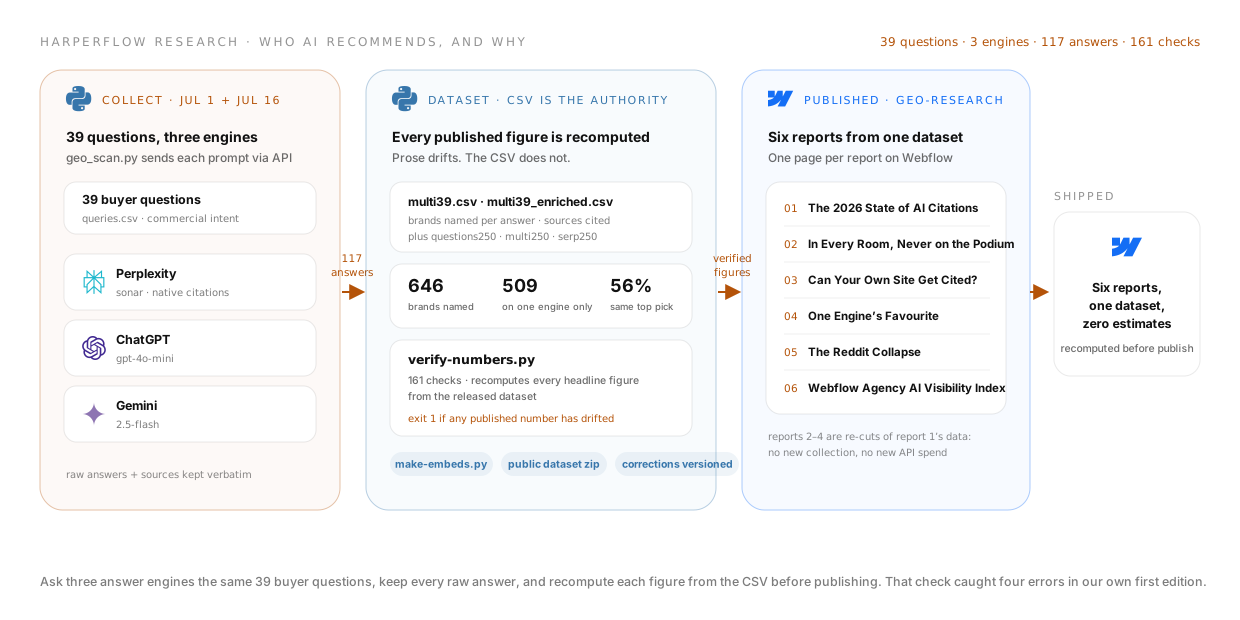
- Define the question set. Record the buyer questions and the scope of the comparison.
- Capture the engine responses. Run the questions across ChatGPT, Perplexity and Gemini, preserving the original material.
- Structure and verify. Keep the structured datasets and run consistency checks against the figures used in the reports.
- Publish with traceability. Present the findings alongside the dataset, method and scope limits, then repeat the comparison with care.
Tools and platforms
- Perplexity
- ChatGPT
- Gemini
- Structured data
- Verification scripts
What the design enables.
- Retain the underlying answers. A reader can inspect the material behind a finding instead of relying only on a summary chart.
- Keep the comparison controlled. The same question set gives the research an explicit scope that can be repeated.
- Separate observation from promise. The dataset describes the captured answers; it is not a guarantee of future recommendations or rankings.
The difficult parts.
The project treats the answers as research observations. Keeping the question set explicit makes the scope understandable and allows a later scan to include the same questions.
The original answers are retained rather than discarded after a summary is produced. This gives the analysis a trail back to the material that was captured and makes disputed interpretations easier to investigate.
Build notes and context.
The public research record includes a 39-question baseline, a 250-question follow-up, structured CSVs and a verification script. Six reports explore different aspects of that record. The architecture image illustrates the baseline; the later scan broadens the dataset.
Citation-source analyses are scoped to Perplexity in this dataset, where the relevant source URLs were available. Brand-name analyses use the returned answer text across the three engines. These are different kinds of evidence and need different labels.
The verification script recomputes reported figures from the data and detects drift between the dataset and the prose. That protects numerical consistency; it does not turn an engine’s answer into an independently verified fact.
The practical value is a repeatable and inspectable measurement process. The results describe the captured snapshots, not a guarantee of future rankings, recommendations or citations.
Read the public GEO research and datasets. For related implementation work, explore AI agents and research workflows.
Have a related process in mind?
Tell me what goes in, what should come out and where the current process gets stuck.