
What Is Human in the Loop AI?
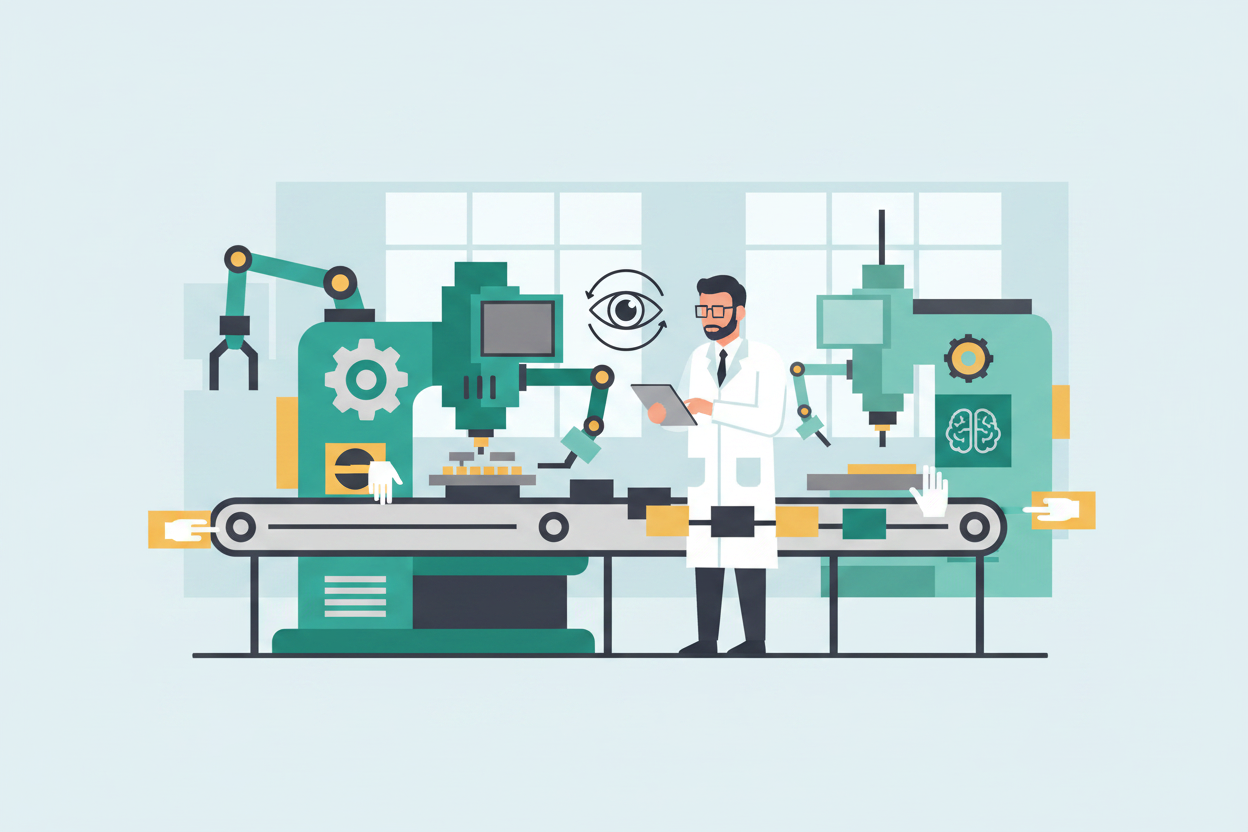
Human in the loop AI (HITL) is a design pattern where humans review, correct, or approve AI outputs at defined points in a system's operation before action is taken, ensuring accuracy, safety, and accountability. The loop is the cycle: model generates, human checks, feedback returns to improve the system. Two related models sit alongside it: Human-on-the-Loop (HOTL), where humans monitor asynchronously and override by exception while the AI keeps acting, and Human-over-the-Loop (HOL), where humans set policy and audit outcomes periodically rather than checking each decision in real time.
That pattern is established in the field. IBM describes HITL as a system or process in which a human actively participates in the operation, supervision or decision-making of an automated system, and Databricks defines it as an AI and machine learning approach where people actively participate in training, supervision or decision-making to improve accuracy, safety and ethical alignment.
In ML research those roles stay abstract, but in live content production they translate to concrete pipeline positions, where a brief is validated, a draft is held for review, or a publish is blocked. That single-line distinction between HITL, HOTL, and HOL is easy to state but hard to engineer. The next section breaks down exactly what differs mechanically.
HITL vs. HOTL vs. HOL: The Engineering Differences That Actually Matter
With the three models defined, the real question for a production team is: where in an actual content pipeline do these checkpoints go? Most public definitions stop at who watches. Engineers have to decide how the workflow behaves when a human is needed.
IBM frames human in the loop as a system where a human actively participates in operation or decision-making, with EU AI Act guidance that high-risk systems must be overseen by natural persons during use.
Databricks sharpens the operational split: HITL means the AI pauses and waits for a person to review or approve before acting, while HOTL means the AI acts on its own while a person monitors and steps in when something looks wrong.
Mechanically, that difference is blocking vs. non-blocking:
- HITL is synchronous. The pipeline halts at the node, creates a review task, and resumes only on explicit approve/reject. Use it when the next action is irreversible.
- HOTL is asynchronous. The pipeline proceeds, emits traces to a dashboard, and a human can intervene via sampled review, threshold alerts, or a kill-switch. Use it when speed matters but you need override authority.
- HOL is periodic. No individual item is blocked. Governance happens over aggregates: audit logs, error rates, policy changes.
| Model | Trigger | Checkpoint Type | Typical Tooling Pattern | Primary Failure Risk |
|---|---|---|---|---|
| Human-in-the-Loop (HITL) | Low confidence score or high-stakes irreversible action flagged | Blocking — workflow halts until approval | Wait-for-approval node halts pipeline, routes to reviewer queue | Throughput stall and queue buildup if over-applied |
| Human-on-the-Loop (HOTL) | System running, exception or anomaly score breach | Non-blocking async monitoring with override | Live dashboard, sampled logs, alert + pause/rollback capability | Missed intervention when monitoring coverage is thin |
| Human-over-the-Loop (HOL) | Scheduled audit window or drift/compliance signal | Non-blocking periodic audit | Governed trace logs and evaluation reports reviewed quarterly to adjust policies | Delayed correction — errors ship before governance review |
Knowing which model applies still leaves the harder question: where exactly, in the flow from idea to published article, should each checkpoint sit?
Where Human Checkpoints Belong in a Content Production Pipeline
A content pipeline needs more than one generic review step. It needs five distinct checkpoints, each catching a different failure mode with a different blocking behavior.
1. Idea / Brief Intake Check: Is the angle on-brand, source-constrained, and safe to automate? Human validates keyword intent, mandatory sources, and exclusion flags (medical, legal, competitor claims). Gate: synchronous blocking for new clients or high-risk topics, async spot-check for recurring series.
2. AI Outline + Draft Generation Check: Drift from source material and structural completeness. Human scans the outline for missing sections, invented subtopics, or off-brief expansion before full draft spend. Gate: async spot-check by default, flipped to synchronous when brief confidence is low.
3. Fact / Quality Review Check: Factual claims, brand voice, and formatting. This is where reviewers verify citations, numbers, names, and tone against the style guide, not just grammar. Databricks frames this as inference review for uncertain or high-risk outputs with escalation when a risk threshold is crossed, and notes that mature systems route only a subset via thresholds rather than everything. Gate: synchronous blocking.
4. Pre-Publish Gate Check: Final compliance, SEO metadata, and on-page rendering. Does the title, internal linking, and schema match spec? Any disallowed content slipped through? Gate: synchronous blocking, the last hard stop before the CMS publish call. IBM describes this pattern as pausing the workflow at state checkpoints until human feedback arrives, implemented via static interrupts before or after a specific node and dynamic interrupts from within a node.
5. Post-Publish Monitoring Check: Performance drift and source divergence after live. Human reviews traffic anomalies, factual updates to source pages, or model drift signals. Gate: async monitoring / human-on-the-loop, with override to unpublish or patch.
Naming the checkpoints is only half the job. The next section covers the actual engineering logic that makes those checkpoints trigger reliably instead of running on vague human vigilance alone.
The Engineering Mechanics: Thresholds, Adjudication, Gating, and Drift Detection
These mechanics only work if they're calibrated correctly. Get them wrong and HITL creates new problems instead of solving old ones. Turning "human review" into a system means code, not policy memos.
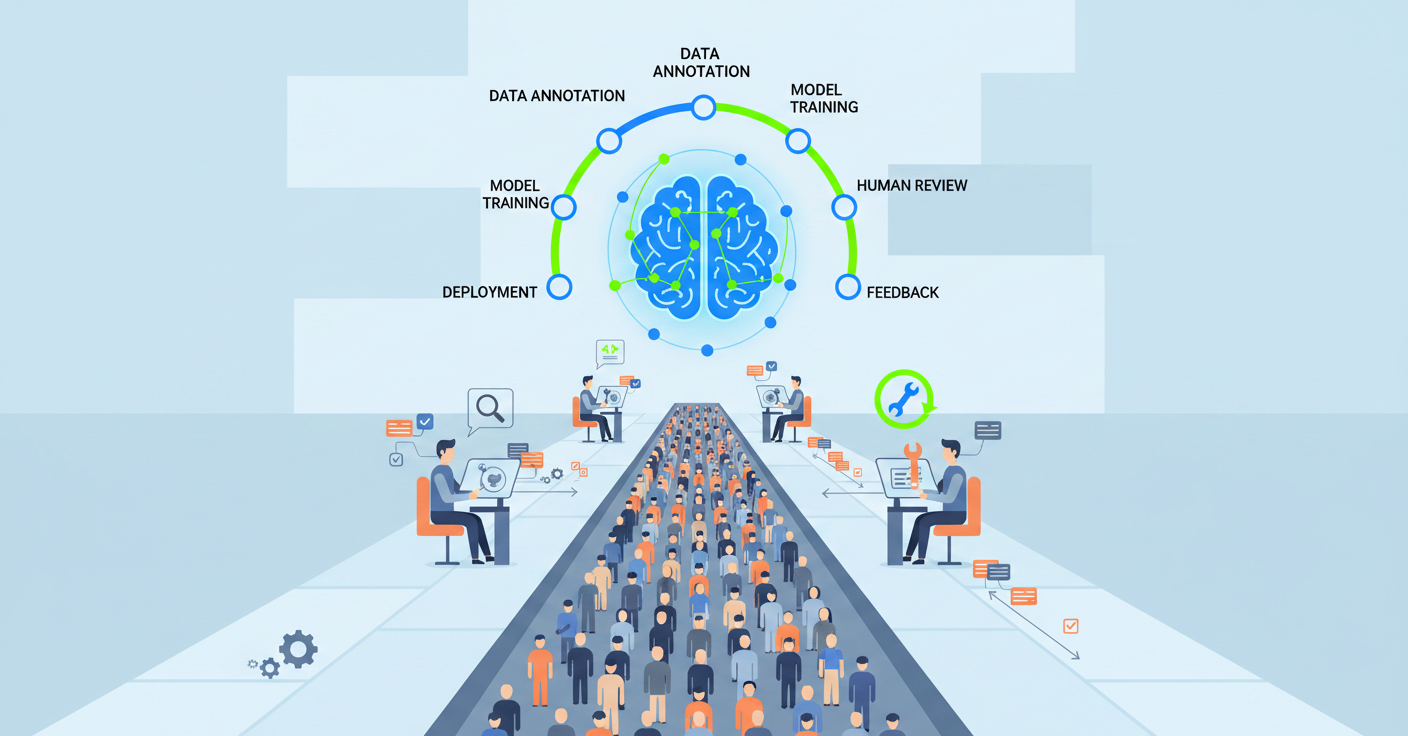
1. Confidence thresholds. Every output gets a calibrated score. A deferral policy routes items below tau to a human instead of guessing. In content terms: factual claims with low similarity to sources escalate; boilerplate formatting at high confidence doesn't. The decision minimizes total cost: (automated errors × error cost) + (escalations × review cost), so high-stakes checks get higher thresholds. A production router implements three tiers: auto-approve, async soft review, and hard blocking gate.
2. Adjudication queues. Thresholds catch uncertainty; adjudication catches ambiguity. Items where two models disagree, where voice rules conflict, or where a fact-check returns unverified land in a structured review queue with priority, full context, and assignment, not a Slack ping. The queue captures decision state as workflow state, so pending/approved/rejected/modified directly drives what happens downstream.
3. Gating logic. A gate is a synchronous block. The workflow hits a runtime approval gate, checkpoints its state (draft, citations, diff), and cannot publish until sign-off. If the gate isn't satisfied, downstream nodes never fire. No bypass.
4. Drift detection. Thresholds go stale. You track error rates on auto-approved items, escalation rates, and semantic drift in outputs. When curves shift (new topic, model update, source change) the monitor flags for re-calibration and temporarily tightens thresholds, routing more to humans until stability returns.
Hesham.us Automated Content Pipelines is one illustration of this exact stack: n8n orchestration plus custom code implementing thresholds, adjudication queues, hard publication gates, and drift monitors, so content gets generated and gated, not just shipped through.
HITL only works in production if thresholds and gating logic are engineered in code — 'review it manually' is not a system.
Even well-built checkpoints can fail in two very specific, well-documented ways, worth naming so you can design against them.
The Two Failure Modes: Rubber-Stamping and the Bottleneck Effect
Both ways a human checkpoint dies in production are documented, not hypothetical. A systematic review of HITL vulnerabilities frames them as core risks that appear across domains when interaction cost and trust calibration are mismanaged.
1. Rubber-stamping / automation bias. Reviewers begin to assume the model is right unless an error is glaring. Agudo and colleagues, summarized in the review, found that humans often fail to detect and correct AI mistakes even when they have the knowledge and ability to do so. In a content pipeline this looks like approved drafts with unchanged hallucinations, editorial comments reduced to "LGTM," and reviewers who spot errors after publish but not during review. Time pressure and high model fluency make it worse.
2. Bottleneck and cognitive fatigue. The opposite failure is over-gating: routing 100% of outputs through a person. Queue depth grows, turnaround slips, and the reviewer pool burns out. The review notes that cognitive load management is central to effective HITL design, and that poorly designed automation can actually degrade human performance by inducing complacency, reducing skill maintenance, or overwhelming operators with alerts and information. In publishing terms, fatigue doesn't create carefulness; it feeds the first failure, because a tired editor is more likely to rubber-stamp.
Pipeline design prevents both without adding more gatekeepers:
- Sampling-based spot review. Replace 100% review on low-risk stages with a statistical sample (e.g., 10% of auto-approved how-tos) that keeps reviewers confronted with real errors.
- Escalate only on genuine ambiguity. Keep a human out unless signals indicate low confidence, factual conflict, or policy edge-case. Everything else stays logged for async viewing.
- Rotate assignments and define disqualification. No single editor owns a vertical forever; rotate weekly and require a different reviewer for content the author edited.
- Periodic re-audit of auto-approved work. Once a month, pull a blind set of auto-approved pieces and grade them against the same rubric used in adjudication. Publish the miss rate to the team.
With the failure modes named, the last question is practical: how do you decide, stage by stage, which checkpoints need a human synchronously versus which can run on monitoring alone?
Deciding Where You Need HITL, HOTL, or Full Automation
Start with consequence, not convenience. A stage earns stricter human control when a mistake is expensive, visible, and hard to reverse.
Every new account that signs up gets a 7 day free trial and 3 complimentary articles.
Use this filter to assign autonomy:
Synchronous sign-off: Choose it when impact is irreversible or regulated, brand voice is on the line, or your model signals low confidence. You trade speed for certainty here, and you want that trade.
Async monitoring (human-on-the-loop): Choose it for high-volume, low-friction steps where errors are detectable and fixable after the fact. Humans watch a queue or dashboard, intervene when alerts fire, but do not block every item.
Periodic audit (human-over-the-loop): Choose it only after a process shows stable accuracy, low drift, and clean logs for weeks. Review samples, check trend lines, and adjust rules rather than inspecting each output.
To put this into practice without rebuilding your pipeline, start narrow. Pick the one or two checkpoints where failure hurts most. Instrument confidence scoring on those outputs before you add any new gates. Let real review data set your initial thresholds, then revisit them as performance shifts. That sequence prevents over-gating on day one and gives you evidence for where autonomy can expand.
Document the decision for each stage: stake if wrong, reversibility, current accuracy, and who owns the override. If two of those lean high risk, keep it synchronous. If only one leans high, move it to monitoring. If none do over a sustained window, graduate it to audit. Revisit monthly at first, then quarterly.
Hesham.us Automated Content Pipelines approaches the mapping the same way, with a diagnostic of what should stay human, what can run supervised, and what is safe to automate outright, so the system earns trust before it earns speed.
Sources
- Human In The Loop
- What is Human-in-the-Loop (HITL)?
- Human In The Loop AI Agent Langraph Watsonx.AI
- Human-in-the-Loop in ML Systems — Complete Guide (2026)
- AI Human in the Loop: Production Oversight Patterns
- Human-in-the-Loop Artificial Intelligence: A Systematic Review of Concepts, Methods, and Applications
Frequently Asked Questions
How do I know when to escalate from human-on-the-loop monitoring to a blocking human-in-the-loop gate?
Use irreversible impact and risk threshold as the trigger. Databricks notes that people review certain outputs before action when predictions are uncertain, unusual or tied to higher-risk decisions and the system hands off when it crosses a defined risk threshold. If the next action like publishing cannot be rolled back, keep it synchronous HITL where AI pauses and waits for a person to review or approve.
How should I set the initial confidence threshold tau for deferring to a human?
Do not pick arbitrarily. Start by scoring a sample of outputs against source similarity and grading errors, then set tau to minimize total cost of errors plus reviews. Then implement the three-tier router from the HITL guide: auto-approve, soft async review, and hard gate that routes items below tau to human when g(x) < tau.
What makes an adjudication queue actually work instead of becoming a Slack inbox?
Capture human decisions as workflow state. The production pattern shows review queues should track pending, approved, rejected as workflow state that drives downstream automation. Include full context, citations, priority, and assignee so reviewers act inside the queue.
Why do even trained editors miss AI hallucinations during review?
It is a documented bias, not carelessness. A systematic review found humans often fail to detect and correct AI mistakes even when they have the knowledge and ability to do so. Time pressure and fluent outputs make it worse, so design with sampling, forced checks, and rotation.
Does the EU AI Act actually require human oversight?
For high-risk systems, yes. Article 14 states high-risk AI systems shall be designed and developed in such a way, including with appropriate human-machine interface tools, that they can be effectively overseen by natural persons during the period in which they are in use. That maps to synchronous gates for irreversible or regulated steps.
What is the difference between static and dynamic interrupts in a HITL workflow?
IBM defines static interrupts as editing the graph state directly at predetermined points before or after a specific node is executed. Dynamic interrupts are triggered from inside the node when uncertainty emerges, using state checkpoints where the workflow pauses until human feedback is received.
How do I prevent a human checkpoint from becoming a throughput bottleneck?
The systematic review notes the question of cognitive load management is central to effective HITL design and poorly designed automation can degrade performance by overwhelming operators. Avoid 100% human review on low-risk stages, route only a subset via confidence thresholds and risk scoring, and add sampling plus periodic re-audit of auto-approved work.
When can I safely downgrade a synchronous gate to async monitoring or periodic audit?
When error rates on auto-approved items stay low, escalation rates are stable, and semantic drift is flat over weeks. Move it first to human-on-the-loop where AI acts while a person monitors and steps in only when something looks wrong, then to human-over-the-loop periodic review once logs show sustained stability.